This is the second post of a three-part series (see first part) on great engineers, inventors, pioneers, aviators and pilots that have shaped the history of aviation. Each profile provides a little nugget of information about their key achievements and invites you to learn more about these pioneering men and women by clicking on the embedded links. While this is not a comprehensive list, I have tried to include a broad spectrum of names, including the classics we have all heard of, as well as some of the less well known, and in my opinion, underrated pioneering aviators. Enjoy!

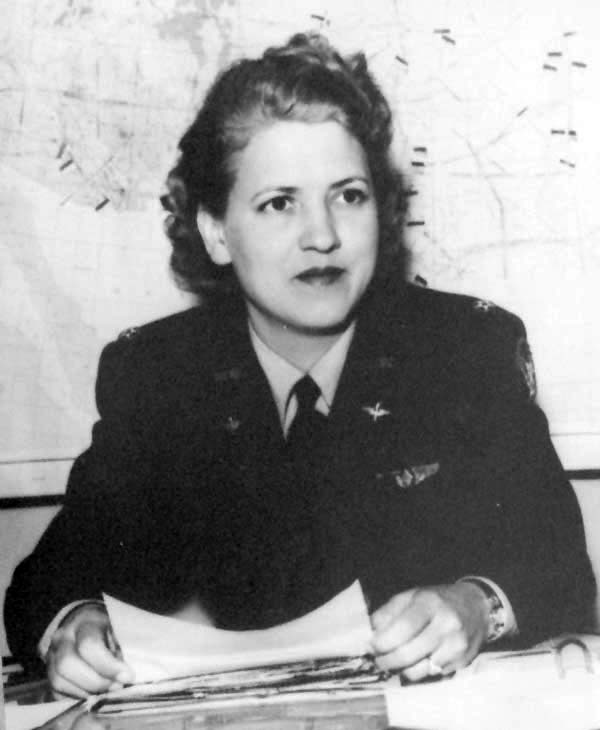
Amelia Mary Earhart
Role: Pioneering US Pilot
Born: July 24, 1897 Disappeared: July 2, 1937 Declared Dead: January 5, 1939
Best known for: Early aviation records, first woman to fly solo across the Atlantic Ocean
Alma Mater: Columbia University
In 1918, Amelia Earhart and a friend visited an air show associated with the Canadian National Exhibition in Toronto. The flying exhibition was led by a WWI flying ace, who pulled off a stunt by diving at Earhart and her friend, who were watching from an isolated clearing, seemingly trying to scare them and cause them to run. Earhart did not budge, and as the red airplane swooshed overhead, it seemingly whispered something to Earhart, as she would later recall. Two years later, the air racer Frank Hawks gave Earhart a ride in an airplane that would change her life for good—she now knew she had to fly. By working a variety of odd jobs, Earhart earned enough money to afford flying lessons (1921) with Neta Snook in a Curtiss JN-4. In 1922, Earhart purchased a secondhand Kinner Airster biplane, which she flew to 14,000 feet, setting a new world record for female pilots (not yet having received her license). After a series of medical problems throughout the mid-1920s, Earhart returned to flying in 1928, in an attempt to fly across the Atlantic Ocean. Charles Lindbergh had just completed this feat in 1927, and the book publisher George P. Putnam, who published Lindbergh’s biography “WE”, was keen to sponsor Earhart’s flight. Earhart accompanied pilot Wilmer Stultz on a flight from Newfoundland to South Wales in a Fokker F.VIIb, strictly speaking as a passenger, but with the additional duty of keeping flight logs. After this flight, members of the press started to refer to Earhart as “Lady Lindy”, and she embarked on a lecture tour throughout 1928/1929, published a book alongside Putnam, and began appearing publicly in brand endorsements. Nevertheless, Earhart was committed to breaking records on her own. In 1928, she became the first woman to fly solo across the USA and back. In 1931, she set a world altitude record at 18,415 feet in a Pitcairn PCA-2. Finally, in 1932, Earhart set off from Newfoundland to fly solo across the Atlantic Ocean in a Lockheed Vega 5B, landing in Northern Ireland just shy of 15 hours later, thereby repeating Lindbergh’s feat of 1927. Upon this success, Earhart received many accolades such as the Distinguished Flying Cross and Gold Medal of the National Geographic Society. With her increased fame, she developed many high profile friendships, such as with First Lady Eleanor Roosevelt, who shared Earhart’s advocacy for women’s causes in society. Even though these record flights seem like stunts today, the media coverage they gained were crucial in convincing the public that flying was for them too, and not just for daredevils. Indeed, Earhart invested time and money in realising the Ludington Airline, which flew the first air service between New York and Washington, DC. In 1936, Earhart starting planning a round-the-world flight, choosing a longer equatorial route of 29,000 miles, than had previously been flown by a team of US Army aviators in 1924 over 175 days. A Lockheed Electra 10A was built to her specifications with a larger fuel tank. In 1937, a first attempt failed after the first leg, when Earhart ground-looped (rapid yawing and rolling) during take-off, severely damaging her Lockheed Electra. The same year, Earhart started her second attempt, departing eastward from Miami, successfully stopping in South America, Africa, India, South East Asia and New Guinea. After completing 22,000 miles of her journey, only 7,000 miles remained. On July 2, Earhart and her navigator Fred Noonan intended to fly from New Guinea to Howland Island, but through a series of poor planning, technical faults, human errors and communication misunderstandings, the approach to Howland, via radio navigation with a US plane stationed on the island, was not successful. The fate of Earhart and Noonan remains unclear but current research and speculation suggests that the Electra either ran out of fuel and crashed into the Pacific, or that Earhart managed to land on one of the neighbouring island. The mystery of Earhart’s crash maintains a world-wide interest in her story and fuels treasure hunts to this day.

Kraftt Arnold Ehricke
Role: Pioneering Space Scientist
Born: March 24, 1917 Died: December 11, 1984
Best known for: D-1 Centaur, NEXUS rocket, space station design
Alma Mater: Technical University of Berlin
Kraft Ehricke was a German rocket engineer and one of the very early advocates for space colonisation. Inspired by Fritz Lang’s movie “Woman in the Moon”, he formed his own rocket society at the young age of 12. He obtained a degree in Aeronautical Engineering from the Technical University of Berlin, studying celestial mechanics and nuclear physics from scientific greats such as Hans Geiger and Werner Heisenberg. During WWII, he worked at Nazi Germany’s infamous Peenemünde rocket research centre, and then emigrated to the USA under Operation Paperclip in 1947. Initially, Ehricke continued to develop the V-2 rocket for the US Air Force alongside Wernher von Braun in Huntsville, Alabama, and the two engineers wrote a book about how humans would travel to Mars using a spaceship ferry system. In 1952, Ehricke transitioned from government service to the private sector, working for Bell Aircraft and Convair. At Convair he designed the first upper-stage-booster using liquid hydrogen and oxygen, the D-1 Centaur. Realising the terrible cost structures of disposable rockets, Ehricke led the design of the NEXUS reusable concept rocket at General Dynamics, and also participated on Project Orion, which attempted to design a nuclear propulsion rocket. Ehricke was a true “big thinker” and visionary, conducting a long, multi-year study of the Moon, and drawing up plans to colonise the Moon as the seventh continent using nuclear-powered freight transporters and envisioning fusion-energy-powered cities. Quite fittingly, Ehricke was buried in space, when a small rocket placed part of his cremate remains in orbit.

Jacob Christian Hansen Ellehammer
Role: Engineer, Inventor and Aviation Pioneer
Born: June 14, 1871 Died: May 20, 1946
Best known for: Ellehammer semi-biplane
Jacob Ellehammer had a rather unusual path to aviation. Initially trained as a watchmaker in Copenhagen, Denmark he began working as an electronic mechanic and incorporated his own company in 1898, producing cigarette and beverage dispensers. However, Ellehammer’s mind was too curious to be constrained to a single discipline and so he began tinkering with mechanical devices, producing his first motorcycle in 1904. Using the skills and knowledge gained from building a motorcycle, he then devised the world’s first air-cooled radial engine—a three-cylinder design which was later upgraded to a five-cylinder design in 1907. In 1905, he built a monoplane with a large, triangular wing fitted with one of his engine designs. In 1906, Ellehammer evolved this design into a “semi-biplane” with a single unbroken triangular main wing, with another triangular wing mounted above it that connected to the main wing at the three corners. The pilot was suspended beneath this contraption like a pendulum, such that the aircraft could be controlled by shifting the pilot’s weight from side to side. Unaware of the achievements of the Wright brothers, Ellehammer managed a short, tethered, hopping flight of 42 m at the relatively low altitude of 0.5 m. A year later, Ellehammer invented a triplane version (three triangular wings), which was capable of untethered flight (record 300 m), and in 1912 he built a helicopter, which had the capabilities of hovering in mid-air, although it is unclear if the machine was capable of moving horizontally.

Anton Herman Gerard “Anthony” Fokker
Role: Dutch Aircraft Designer
Born: April 6, 1890 Died: December 23, 1939
Best known for: Eindecker monoplane, Dr.1 triplane, D.VII biplane
Anthony Fokker was born on the island of Blitar, at the time part of the Dutch East Indies, now Indonesia. But as a young boy his family returned to the Netherlands. Lacking formal technical education, Fokker’s achievements can largely be attributed to his autodidact nature (he did not complete high school but preferred tinkering with mechanical devices), native inventiveness and a spark of genius. One apocryphal (not factual) story suggests that he developed the machine gun synchroniser (to prevent bullets from hitting propeller blades) just 48 hrs after receiving the assignment. Balancing his lack of technical training was his philosophy of rapid trial and error. Fokker was a skilled pilot himself, and so by flying his own designs he was able to quickly iterate, and also actively incorporate the opinions and advice of fighter pilots and other engineers. Fokker’s interest in flying stemmed from a Wilbur Wright exhibition flight that Fokker, age 18, saw in Paris. At age 20, Fokker enrolled in the automotive polytechnic school in Mainz, Germany where he built a series of three “Spider” aircraft, which he used to obtain his flying certificate and then brought him notoriety in his home town of Haarlem, by flying the Spider around the church tower. In 1912, Fokker founded his first company in Berlin but later relocated to Schwerin, renaming the company Fokker Werke GmbH. At the outbreak of WWI, the German authorities seized his factory but Fokker remained as the director and chief designer. During WWI, Fokker’s company produced about 700 military planes, and all of Germany’s flying aces—Voss, Immelmann, Bölke, von Richthofen (the Red Baron)—flew Fokker aircraft. To this day, the Eindecker monoplane, the D.VII and the Dr.I triplane (flown by von Richthofen) are considered to be the best airplanes of WWI. Due to the ban on flying machines in Germany after WWI—the Fokker D.VII was the only plane singled out by name in the Treaty of Versailles for its immense destructive power—Fokker emigrated to the US, where he focused on the design and production of commercial transportation aircraft. His most famous aircraft design during this period was the Fokker F.VII trimotor (with one propeller under each wing and one at the front), one of the most successful passenger aircraft of the 1920’s-1930’s. Indeed, many a pioneering flight of that period was flown in one of Fokker’s designs—the first non-stop transcontinental flight across the US (Fokker T-2), the first flight over the North Pole (Fokker F.VIIa/3m), and an endurance flight of 150 hrs that tested aerial refuelling (Fokker Question Mark).

Yuri Alexeyevich Gagarin
Role: Russian Cosmonaut
Born: March 9, 1934 Died: March 27, 1968
Best known for: First human in outer space, first human to orbit Earth
Alma Mater: Saratov Industrial Technical School (1955), Chkalov Air Force Pilot’s School (1957)
Yuri Gagarin was the best advertisement the Soviet Union could ask for at the height of the Cold War. Born into a rural peasant family working on a collective farm, Gagarin became the first human being in space and an international celebrity—epitomising the philosophy of status irrelevance that the Soviet Union stood for. As the pilot of the Vostok 1 capsule, Gagarin’s 108 min orbital flight on April 12, 1961 ultimately proved that humans could endure in new environments—the immense forces acting during take-off and atmosphere re-entry, and the strange condition of weightlessness in orbit. The radio communication between Gagarin and the launch control room,
Korolev: “Preliminary stage….. intermediate….. main….. lift off! We wish you a good flight. Everything is all right.”
Gagarin: “Поехали!” (Poyekhali!—Let’s go!).
became famous in the Eastern Bloc nations, and the phrase “Poyekhali” was thereafter used to denote the beginning of the Space Age. After receiving many accolades, including the Soviet Union’s highest honour (Hero of the Soviet Union), Gagarin was later responsible for training future cosmonauts. He tragically died in 1968 when his MiG-15 training jet crashed.

John Herschel Glenn Jr.
Role: American Astronaut and Fighter Pilot
Born: July 18, 1921 Died: December 8, 2016
Best known for: First American in orbit, distinguished fighter pilot
Alma Mater: Muskingum College (1962), University of Maryland
John Glenn was introduced to the world of aviation at the tender age of eight, when his father took him on an airplane flight. Fascinated by flying, Glenn started to build model airplanes from balsa wood kits and entered Muskingum College in 1939 to study engineering. While at Muskingum, Glenn earned a private flying license, and when the Japanese attacked Pearl Harbour, Glenn quit college to enlist in the Army Air Corps and later transferred to the US Marine Corps. In 1943, Glenn joined the WWII war effort in the Marine Fighting Squadron 155, flying F4F Wildcat fighters and F4U Corsairs on 57 combat missions in the Pacific. Shortly after the war, Glenn served in Northern China in Marine Fighting Squadron 218 before working as a flight instructor in Texas and Virginia. But with the outbreak of the Korean War, he was once again ordered into active service. He flew 63 missions with the Marine Fighter Squadron 311 in an F9F Panther and 27 missions as an exchange pilot to the Air Force in the F-86 Sabre. Glenn was a highly distinguished fighter pilot during the Korean War, shooting down 3 MiG aircraft in the last nine days of the war alone, but was also notorious for his ability to attract enemy fire, twice returning with more than 250 bullet holes in his aircraft, which earned him the nickname “Magnet Ass”. Based on his achievements, Glenn was selected for the Navy’s test pilot school in Patuxent River, Maryland, setting a new transcontinental speed record from Los Alamitos to New York in 3 hrs 23 min, the first transcontinental flight with an average supersonic speed. In 1959, Glenn was chosen as one of the Mercury 7, the first batch of astronauts, and on February 20, 1962 became the first American to orbit the Earth, circling it three times during the Friendship 7 mission. This mission did not go entirely smoothly, as the automatic-control system failed after the first orbit, and a faulty sensor indicated that the Friendship 7’s heat shield had come loose so that the ground controllers decided to leave the solid-fueled retrorocket packet in place to stabilise the heat shield. Glenn continued working for NASA on the early Apollo programme and was especially valuable to the Space Program as a national iconic figure, but he retired from NASA in 1964 to enter politics. He was elected US Senator for Ohio in 1974 and served for 24 years. In 1998, still serving as a senator, Glenn became the oldest person to fly in space as crew on the Discovery space shuttle. Alongside six Distinguished Flying Crosses and 18 Air Medals, he also received the Presidential Medal of Freedom in 2012.

Robert Hutchings Goddard
Role: Inventor and Rocket Pioneer
Born: October 5, 1882 Died: August 10, 1945
Best known for: First liquid-fueled rocket
Alma Mater: Worcester Polytechnic Institute (1908), Clark University (1911)
Historically, the very early developments of airplanes and rockets took very different routes. While the pioneering days of aviation were largely governed by practically minded tinkerers and daredevils that created their own designs, the complexity of rockets and their tendency to blow up, meant that highly trained engineers and scientists made many of the early breakthroughs. Robert Goddard was one such scientist, trained at Worcester Polytechnic and with a PhD in Physics from Clark University, he initially taught Physics at Clark and for a short time at Princeton. Throughout this time he began working through the maths of using rockets for escaping Earth’s gravity, and came to the conclusion that it would be possible with multi-stage rockets fuelled with a solid “explosive material” or with liquid propellants (gasoline and liquid nitrous oxide)—two ideas that he patented in 1914. By 1916 Goddard could no longer afford to foot the cost of his research, so he applied for and eventually received a grant from the Smithsonian Institution to further develop his work on solid-fueled rockets but he also began work on liquid-fueled ones. His grant application, summarising his work up to that point, was later published as his seminal work “A Method of Reaching Extreme Altitudes“. After 15 years of research, he successfully launched the world’s first liquid-fueled rocket on March 16, 1926, to an altitude of 184 feet with a flight time of 2.5 seconds. After another three years of refining his design, he launched another liquid-fueled rocket in 1929, which carried a small camera and a barometer as payload. In the 1930s, he received a Guggenheim Foundation grant, and in 1935 launched a rocket with gyroscopic controls. In total, he and his team launched 34 rockets between 1926 and 1941 reaching impressive heights of 2.6 km and top speeds of 885 km/hr (highest altitude flight in 1937), just missing out on breaking the sound barrier. His ideas on gyroscopic controls, thrust vectoring, liquid fueling and multi-stage rockets anticipated or first developed many of the technologies that made spaceflight possible. Goddard was one of the tragic pioneers that was slightly ahead of his time. While he recognised the full potential of rocketry for atmospheric research, missile technology and space flight, and laid the scientific groundwork to design and construct rockets, he was largely underfunded during his career (probably due to a lack of vision from the government in Washington) and also ridiculed for his ideas by the press. He was posthumously awarded the Daniel Guggenheim Medal in 1964.
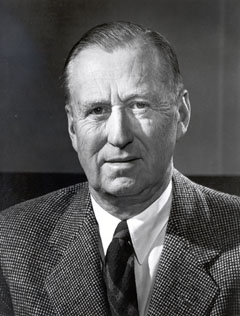
Leroy Randle Grumman
Role: Engineer and Industrialist
Born: January 4, 1895 Died: October 4, 1982
Best known for: Grumman Aerospace Co.
Alma Mater: Cornell (1916), MIT
Leroy Grumman studied Mechanical Engineering at Cornell University before enrolling in the Navy and becoming a pilot in 1918. For two years he served as a flight instructor and completed one tour in a bombing squadron, before the Navy sent him to MIT to study the new field of aeronautical engineering. Upon his return, the Navy stationed Grumman at Loening Aeronautical Engineering Corporation in NYC to supervise the construction of 52 Loening M-8 monoplanes, which were being built under contract for the Navy. Grumman quickly rose through the ranks at Loening, becoming a factory manager and then general manager responsible for aircraft design. After Loaning was bought-out by Keystone in 1929, Grumman formed his own company, the Grumman Aeronautical Engineering Corporation, first repairing Loaning amphibian aircraft and then constructing his own designs. The Grumman FF-1 biplane fighter produced for the US Navy introduced the retractable landing gear and enclosed cockpit, and his cooperation with the Naval forces continued for many decades. Some of the pioneering aircraft Grumman produced were Grumman’s first monoplane design, the F4F Wildcat, the first practical folding-wing plane with superior stowage capabilities on aircraft carriers; and the F6F Hellcat fighter which was introduced for WWII in 1942. The folding “Sto-Wing” capability was single-handedly invented by Grumman and showcased his genius as a master engineer. Grumman supposedly worked out a solution to the problem by sticking paper clips into erasers to find the right fulcrum that would make the Sto-Wing possible. Grumman’s company produced more than 30,000 aircraft during WWII. For the Korean War, Grumman produced the Navy’s first jet fighter, the F9F Panther, and the SA-16 Albatross amphibian which was used for search and rescue operations. Grumman’s company is now part of the large Northrop Grumman Corporation.

Sir Geoffrey de Havilland
Role: Aircraft Designer and Industrialist
Born: July 27, 1882 Died: May 21, 1965
Best known for: de Havilland Company
Alma Mater: Crystal Palace School of Engineering (1903)
Continuing from the point made earlier regarding the nature of daredevil aviation pioneers, Geoffrey de Havilland was certainly one of a kind. In 1909, he built his first aircraft, crashed it on its first flight, built a second one and through trial and error, taught himself how to fly. De Havilland eventually sold this second airplane design to the Royal Aircraft Factory, and this airplane then became the F.E.1. In 1914, he became the chief designer at Airco, designing a number of aircraft which all carried his initials: DH. A large number of these aircraft were used by the Allies in WWI. After the automotive business of Airco was bought by BSA Company, de Havilland bought the relevant aerospace assets and formed the de Havilland Aircraft Company. The most significant early designs were the beautiful Moth-series of aircraft, which spawned the beginning of all light sport aircraft. After buying his friend’s (Frank Halford) engine design consultancy, de Havilland began producing its own engines as well, and the first gas turbine jet engine to come out of this new venture (Halford H.1 turbojet, later de Havilland Goblet) powered de Havilland’s first jet, the Vampire, with a unique twin tail-boom construction. The two planes that de Havilland is most famous for are the Mosquito—according to some the most versatile warplane ever built and due to its lightweight plywood construction one of the most unique designs of WWII—and the Comet—the first commercial jet airliner to go into production. Although the Comet was ultimately a failed design and de Havilland was later absorbed by the Hawker Siddeley Company, the lessons learned from the Comet ultimately led to the Boeing 737 and the mainstay of jet airline travel.

Ernst Heinkel
Role: Aerospace Engineer and Industrialist
Born: January 24, 1888 Died: January 30, 1958
Best known for: Heinkel Flugzeugwerke
Alma Mater: Technical Academy of Stuttgart
Ernst Heinkel’s career in aviation spanned half a century! He learned his early technical skills as an apprentice at a foundry, and in 1910, while a student at the Technical Academy of Stuttgart, Germany, he built an aircraft from the plans of Henri Farman. Heinkel crashed this aircraft, like so many of his compatriots did with their own home-builds, and suffered severe injuries. Before and throughout WWI he cut his teeth by working on aircraft designs for Albatros, who built the Albatros B.II reconnaissance plane, and the Hansa-Brandenburg company. In 1922, he started his own company, the Heinkel Flugzeugwerke, and because of the ban on flying craft in Germany after WWI, he designed airplanes on contract for Swedish and Japanese companies. One of his more innovative designs for the Japanese was installing catapults on ocean liners to launch aircraft at sea. Indeed, his collaborative work with the Japanese meant that Heinkel skirted many of the Allied facility inspections, as Japan was part of the inspection commission, and would notify him of upcoming inspections. With the rise of Adolf Hitler in Germany, Heinkel planes became part of the backbone of Nazi rearmament and the Luftwaffe. In the years leading up to WWII, Heinkel produced the He 59, He 111 and He 115, and for this commitment Heinkel was appointed to defence industry leader by the Nazi government. A paragon for high-speed flight, he was keen on experimenting with new methods of propulsion and worked with Wernher von Braun to build a rocket-powered plane (He 176) and also sponsored the research of Hans von Ohain, which led to the first turbojet-powered plane (He 178). Although Heinkel was incredibly passionate about developing faster aircraft and had been a critic of Hitler’s regime in the early 1930’s, he acquiesced for ideological or business reasons and became a member of the Nazi party. When the Nazi government nationalised his factories in 1942, Heinkel moved to Vienna to open new design offices that worked on the He 274 heavy bomber. After WWII, with Germany again under restrictions to build aircraft, Heinkel began producing vehicles for urban transportation, such as a small moped and a bubble car.

Howard Robard Hughes Jr
Role: Pioneering pilot, industrialist, airline executive and film director
Born: December 24, 1905 Died: April 5, 1976
Best known for: Hughes Aircraft Company, round-the-world speed record
Anyone who has seen the film “Aviator”, can appreciate that Howard Hughes was an extraordinary character, partly because of his eccentric behaviour and obsessive-compulsive disorder later in life, and partly because he was a polymath who made billions of dollars as a pilot, aircraft industrialist and airline executive, investor and film director. From an early age, Hughes was interested in technology, building a radio transmitter at the age of 11, a motorcycle at the age of 12, and beginning to fly at the age of 14. When his mother and father died in 1922 and 1924, he inherited 75% of his family’s fortune and the Hughes Tool Company. He quickly began buying all the other partners out and transitioned the company into a conglomerate that throughout Hughes’ life was active in the aerospace, electronics, mass media, manufacturing and hospitality businesses. Upon his father’s death he quit Rice University and moved to Los Angeles to become a filmmaker. There he rose to notoriety, producing controversial films like The Racket (1928) and Scarface (1932), but also winning an Academy Award for Two Arabian Knights (1928). He founded Hughes Aircraft Company in 1932 hiring numerous engineers and designers from rival companies, and his first design, the H-1 racer, with retractable landing gear and flush rivets to reduce drag, established a new world speed record of 352 miles/hr in 1935. In 1937, Hughes piloted this aircraft to a new North American transcontinental speed record of 7.5 hrs. A year later, Hughes flew a Lockheed 14 Super Electra around the world in a new record of 91 hrs, breaking the previous record by 4 days! For these aviation records Hughes received prestigious trophies such as the Collier Trophy, the Harmon Trophy and a Congressional Medal. In 1946, Hughes was involved in a near fatal crash, when he performed the first test flight of the prototype Hughes XF-11, a large all-metal reconnaissance aircraft with contra-rotating propellers. An oil leak caused one of the contra-rotating propellers to reverse pitch, causing the aircraft to yaw and lose altitude. Hughes attempted to save the aircraft by landing on LA Country Club but crashed the airplane into a Beverley Hills neighbourhood, destroying three houses, exploding the aircraft and leaving Hughes severely injured. During WWII, Hughes designed a huge flying boat, the H-4 Hercules, nicknamed the “Spruce Goose” because of its primary use of wood as a construction material, to transport troops and equipment across the Atlantic in a manner not vulnerable to German U-boats. The Spruce Goose was ultimately a failure as it wasn’t completed until after the war, and then only flew once. In 1939, Hughes bought majority ownership of Trans World Airlines, expanding its network into one of the biggest worldwide, and later also bought Air West renaming it Hughes Airwest. Howard Hughes combined the three characteristics that epitomise the quickly developing aviation industry between WWI and WWII: the courage and daring of a daredevil pilot, the technical intuition to champion innovative and superior designs, and the business acumen to make lucrative products out of these innovations.

Hugo Junkers
Role: Aircraft engineer and designer
Born: February 3, 1859 Died: February 3, 1935
Best known for: all-metal airplanes, flying wings, and Junkers Flugzeug- und Motorenwerke AG
Alma Mater: Royal Polytechnic University in Charlottenburg, Royal Technical University in Aachen
Hugo Junkers was a true engineering polymath, who designed many successful aircraft between WWI and WWII, and at the same time filed multiple patents for various diesel engines, thermodynamic and metallurgical concepts he devised. For example, Junkers invented a calorimeter (to measure the total energy released as heat during combustion in piston engines) and personally presented it at the World’s Columbian Expo in Chicago (1893). Between 1897 until 1912, Junkers was a professor of mechanical engineering at the University of Aachen, but also earned a considerable fortune from utilising his inventions (calorimeters, pressure regulators, fan heaters, gas stoves, etc.) under the umbrella of his company Junkers & Co. His economic success allowed him to sponsor the burgeoning Bauhaus architectural movement. A late-starter to aviation, Junkers only began work on aircraft at the age of 50, designing and manufacturing corrugated metal wings for an all-metal aircraft designed by Hans Reissner in Aachen. Junkers vision in the early 1910’s of all-metal aircraft and flying wings was extraordinary for the time, but the more urgent matters of WWI forced him and his renamed business venture. the “Junkers Flugzeug- und Motorenwerke”, to focus on optimising aircraft production. His most successful aircraft designs include the Junkers J 1 (1915) as the world’s first practical all-metal, monoplane aircraft with cantilever wings and no external bracing (the standard design today); the Junkers F 13 (1919) as the world’s first all-metal passenger aircraft; the Junkers W 33 (1926) as the first airplane to cross the Atlantic non-stop east-to-west; the Junkers G 38 (1929) that demonstrated the novel aircraft concept of a “blended wing”; and the Junkers Ju 52, with its corrugated metal sheets, probably one of the most iconic airliners of the 1930s. A common theme to Junkers planes was the all-metal, multi-engined, mono-plane construction, which, standard today, was considered to be a bold design choice of the 1920s, and helped to establish the first commercial airlines in Europe (e.g. Lufthansa). Although the Junkers name is related with many other successful WWII warplanes as well, Junkers was not involved with their design and development, as he was forced to resign from all posts within the company by the Nazi government in 1934 (Junkers was an ardent socialist and pacifist), and died soon thereafter in 1935. However, Junkers pioneering ideas on corrugated, light-metal construction lived on in Russian (Tupolev) and American (Stout) planes.

Theodore von Kármán
Role: Mathematician, aerospace engineer and aerodynamicist
Born: May 11, 1881 Died: May 6, 1963
Best known for: von Kármán Vortex Street, supersonic flow, Aerojet Corporation
Alma Mater: Budapest University of Technology and Economics (1902), University of Göttingen (1908)
Theodore von Kármán was a fascinating character and part of the circle of Hungarian-born scientists that had an extraordinary impact on science at the beginning of the 20th century (I have written about von Kármán here, here and here, and recommended his biography here). Von Kármán contributed to many topics in structural mechanics and aerodynamics, particularly in the fields of shell buckling, turbulent flow, supersonic and hypersonic airflow characterisation, and early rocketry. Indeed, he is considered by many to be the most outstanding aerodynamicist of the 20th century, and the large number of phenomena named after him (vortex street, swirling flow, momentum integral, Kármán constant, etc.), are testament of his achievements. Von Kármán received his doctorate from none other than the father of wing theory, Ludwig Prandtl, and soon thereafter founded the Aeronautical Institute at RWTH Aachen in 1912, building one of the most advanced wind tunnels in the world at the time. Indeed, one of von Kármán’s unique capabilities was his knack at applying mathematics to explain curious experimental observations that he or his students had made in the lab. During WWI, von Kármán designed and built an early helicopter for the Austrian-Hungarian army, and when flying was banned in Germany after WWI he became a champion of competitive gliders. With the growing national socialist movement in Germany during the 1930’s, von Kármán emigrated to the USA in 1930, taking the directorship of the Guggenheim Aeronautical Laboratory at Cal Tech. There, von Kármán’s students designed reliable airframes that accounted for aeroelastic effects (E.E. Sechler), investigated the mystery of cylinder buckling (H.-S. Tsien), and founded the Aerojet corporation (experimental rocketry, now Aerojet Rocketdyne) and Jet Propulsion Laboratory. Von Kármán’s insights into supersonic airflow and the importance of swept-back wings proved to be critical for the advent of supersonic flight shortly after WWII. In 1962, he was awarded the National Medal of Science by president John F. Kennedy.

Sergei Pavlovich Korolev
Role: Rocket engineer and spacecraft designer
Born: January 12, 1907 Died: January 14, 1966
Best known for: Soviet space programme, R-7 booster rocket, Sputnik
Alma Mater: Odessa Building Trades School, Kiev Polytechnic Institute, Moscow State Technical University
Sergei Korolev was one of the key Soviet figures of the Space Race, but also one of the most secretive. The secrecy during the Cold War meant that Korolev was officially, even to cosmonauts of the time, only known as “Chief Designer” to protect him from US assassination attempts. Korolev was especially talented at mathematics at an early age, and after receiving vocational training in carpentry he used his skills to design a glider. During his university days as a student in aeronautical engineering in Kiev and Moscow he continued to built and fly gliders, suffering many injuries as a result, and ultimately obtaining his diploma under the tutelage of the famous aircraft designer Andrei Tupolev. After graduation, Korolev worked in many different engineering roles, piquing an interest in liquid-fueled rockets after working on the Tupolev TB-3 heavy bomber. In 1931, Korolev co-founded the Group for the Study of Reactive Motion (GIRD), which became one of the earliest state-sponsored centres for Soviet rocket research, launching the liquid-fueled rocket GIRD-X in 1933. In the same year, GIRD merged with the Gas Dynamics Laboratory to form the Jet Propulsion Research Institute (RNII), which focused particularly on rocket stability and control using automated gyroscopic stabilisation systems. In 1938, Korolev was imprisoned after being accused of deliberately slowing down the work of RNII and for mismanagement of research funds on unsuccessful rocket experiments. Korolev remained imprisoned for six years, on occasion tortured, sentenced to death, sent to a Siberian labour camp, and finally forced to work as a slave labourer on party leadership-designated science projects. Korolev was discharged from prison by a special government decree in 1944 and was reinstated in the Red Army in 1945, but by this time the Soviet Union had massively fallen behind Germany in rocket research. Based on Korolev’s work on rocket-assisted takeoff systems during his time as a prisoner, Korolev was sent to Germany after WWII to recover some of the V-2 rocket technology. Even though many of the leading rocket brass in Germany emigrated to the US under Operation Paperclip, the Soviets were able to use the expertise provided by more than 2000 engineers and designers that had worked as technicians in the production process of the V-2. After Stalin made rocket development a national priority, Korolev oversaw a team of around 200 German specialists at the new NII-88 institute on Gorodomyla Island, 200 km from Moscow. Korolev became chief designer of the the long-range missile section of the Special Design Bureau 1 of NII-88. His team created a replica V-2, known as the R-1 missile, which showed the same reliability issues as the V-2 in terms of target-hitting accuracy. The following design evolution doubled the range of the original V-2 (R-2 missile), and further increased the range to reach England (R-3 rocket). Korolev then joined the Communist Party in order to apply for government funds that would realise his rocketry ambitions. Under this programme, Korolev led the design of the first intercontinental ballistic missile (ICBM), the R-7 Semyorka, a two-stage rocket with sufficient power to carry a nuclear bomb for 7,000 km. Following the successes of the R-7, Korolev was fully rehabilitated by the Soviet government.
Korolev had already conceptualised ideas in 1953 about using an ICBM to shoot a vehicle into Earth’s orbit. Thus, he pitched the Soviet Academy of Sciences to fund a programme that would adapt the R-7 to shoot a dog into orbit. After the US media began publicly announcing its plans to develop satellites for geophysical purposes, Korolev realised the potential for a great upset if the Soviet Union became the first to realise this goal. Sputnik 1 was designed and constructed in under one month (ultimately a metal sphere with batteries powering a transmitter), and launched in October 1957 using an R-7 booster to international acclaim. The Sputnik 2 capsule was six times bigger than Sputnik 1, again rapidly designed and constructed in four weeks, and carried the dog Laika into space just a month later. As there was no mechanism for re-entry, Laika died during this mission. After these missions, Korolev turned his attention to reaching the Moon, and to do so, ordered the re-design of the upper-stage of the R-7 booster. After a failed Luna 1 mission (yet still the first to leave geocentric orbit), Luna 2 became the first space probe to impact the moon (1959), and just a month later Luna 3 became the first space probe to take a picture of the far side of the Moon. During this time and the subsequent attempts to send a man to the Moon, Korolev’s visions were hampered by the limited government funding available, which meant that launches had to be rushed with inadequate testing. Korolev’s planning for a moon landing began with the design of the Vostok manned spacecraft. A modified version of the R-7 booster rocket was again used to launch Yuri Gagarin into orbit in 1961, and later Valentina Tereshkova as the first woman cosmonaut in space on Vostok 6. After these successes, Korolev planned a new N1 rocket (based on a very unreliable NK-15 liquid-fuelled rocket engine) and the Soyuz spacecraft to carry crew to low-earth orbit and beyond, but Korolev’s unexpected death in 1966 greatly interrupted the practical implementation of his plans. Later critics have pointed out that Korolev’s chief asset was not his scientific or engineering prowess but rather his brilliant management capabilities and his ability to bootstrap components developed for different purposes into one working unit. Ultimately, this bootstrapping philosophy failed to work robustly for the more complex Moon landing endeavours.

Samuel Pierpont Langley
Role: Physicist, inventor and aviation pioneer
Born: August 22, 1834 Died: February 27, 1906
Best known for: “Almost” being the first to design a successful heavier-than-air aircraft.
Samuel Langley is best known for his work as an astrophysicist, professor of astronomy at a number of institutions, the third Secretary of the Smithsonian Institution, and the inventor of the bolometer (instrument used to measure infrared radiation and temperature used by Svante Arrhenius in 1896 to calculate the effects of CO2 on climate). But Langley is also known for his work on heavier-than-air aircraft for the Smithsonian Institution. After his nomination to secretary of the institution, Langley began experimenting with gliders and small models powered by rubber bands, repeating the experiments conducted by Alphonse Pénaud. He then built a “wind tunnel” (essentially a rotating propeller arm to which different objects could be attached) and tested larger aircraft models that were powered by small steam engines. Langley realised that heavier-than-air flight would be possible when he observed that a brass plate connected to his rotating arm could be held aloft by just a tiny connecting spring (the spring alone could not hold the brass plate up alone, so the difference must be provided by aerodynamic lift). On May 6, 1896 his Number 5 unpiloted model flew about 1 km after being launched by a catapult from a boat on the Potomac River in Washington, DC. This extended the contemporary record of heavier-than-air flight by about tenfold, and proved that sustained flight was possible with enough stability and sufficient lifting force. In the same year, his model Number 6 broke this record to 1.5 km, which landed Langley grants totalling $70,000 to develop functional piloted airplanes (Langley preferred the designation “Aerodrome”, roughly translated as “air runner” from Greek). Two engineers, Stephen Balzer and Charles Manly, designed a petrol engine to Langley’s power and weight specifications, but this engine probably had way too much power than was necessary for the job (the 50 bhp engine quadrupled the power output of the Wright brothers’ 12 bhp engine). The aerodrome itself featured wire-braced tandem wings, with a Pénaud-like tail for controlling pitch and yaw. Roll control surfaces were not installed on this aircraft, and Langley relied instead on passive roll stability using upwards-angled wings (dihedral angle). While the Wright brothers designed an aircraft that could be controlled in strong winds and land on solid ground, Langley preferred flight in calm air over the Potomac river, requiring the use of a catapult for launching, and splashing into the river to land (typically severely damaging the aircraft). Unfortunately for Langley, the two launches he attempted in 1903 crashed into the Potomac river. During the first flight, the aerodrome’s wings seemingly clipped the catapult and led to an instability, while on the second flight, the aerodrome fell apart after being launched from the catapult. After the national media and US Members of Congress ridiculed and criticised Langley for his work, he gave up on any further attempts. In 1914, Glenn Curtiss modified the aerodrome and flew it for a couple hundred feet. This feat was used by the Smithsonian Institution for a number of years to lay claim to “the first man-carrying aeroplane in the history of the world capable of sustained free flight”. However, the general consensus remains that the Wright brothers have due claim to this achievement, as only the Wright flyer had a mechanisms for stably controlling the airplane (roll, yaw, and pitch). Today, Langley’s name lives on through a number of awards (Langley Gold Medal), institutions (NASA Langley Research Centre) and the US’ first aircraft carrier (USS Langley).
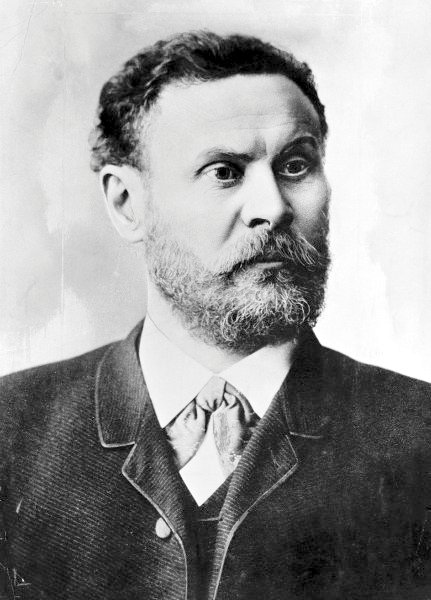
Otto Lilienthal
Role: Early pioneer of aviation
Born: May 23, 1848 Died: August 10, 1896
Best known for: First well-documented and repeated flights with unpowered airplanes
Alma Mater: Royal Technical Academy in Berlin
As a young boy, fascinated by the prospect of flying, Otto Lilienthal began studying bird flight and built a set of (unsuccessful) strap-on wings with his brother. After graduating from a technical school and apprenticing for the Schwarzkopf company, he became a certified design engineer and started his own company, designing mining machines, boilers and steam engines. Soon Lilienthal turned most of his attention to his childhood passion of flying. Like Sir George Cayley before him, he studied the mechanics of birds in great detail and published his famous book “Birdflight as the Basis of Aviation” in 1889. This book summarised his research, especially on storks, using polar diagrams (sink rate vs airspeed) to describe the aerodynamics of bird wings. Based on his insights, he built and patented gliders fitted with a crossbar for carrying and flying the hang gliders (much like hang glider designs today). Between his first glider version of 1891, the Derwitzer, and his tragic death on 10 August 1896 after his glider stalled and crashed from a height of 15 m, Lilienthal made over 2,000 flights in gliders. In the beginning, these flights were merely little jumps from small hills covering distances of around 20 m, but he could also use small thermal updrafts to remain stationary and call to photographers to take fascinating pictures. In 1893, he set his personal record of flying 250 m, which remained unbeaten by anyone until his death. Lilienthal’s legacy lived on for many years as newspapers and magazines captured photographs of Lilienthal flying, which greatly influenced the public’s interest in flying developments and increased scientific experiments regarding the possibility of developing sustained flying machines. The Wright brothers credited Lilienthal as major inspiration for their decision to pursue manned flight in the first place:
“Of all the men who attacked the flying problem in the 19th century, Otto Lilienthal was easily the most important. … It is true that attempts at gliding had been made hundreds of years before him, and that in the nineteenth century, Cayley, Spencer, Wenham, Mouillard, and many others were reported to have made feeble attempts to glide, but their failures were so complete that nothing of value resulted.” — Wilbur Wright

Charles Augustus Lindbergh
Role: Aviator and author
Born: February 4, 1902 Died: August 26, 1974
Best known for: First solo transatlantic flight (1927)
Alma Mater: University of Wisconsin-Madison
Charles Lindbergh had a meteoric rise to fame, when in 1927 as a US Air Mail pilot, he won the Orteig Prize as the first Allied aviator to fly non-stop from New York City to Paris in 33 hours and 30 minutes. Several famous aviators had made unsuccessful attempts at the time, and six lives were lost in the process, before Lindbergh crossed the Atlantic in a custom-built, single-seat monoplane “The Spirit of St. Louis”. The Orteig Prize ($25,000 in 1927, $342,000 in 2015) spearheaded considerable investment in the aviation industry before it was finally won by Lindbergh. This investment totalled many times more than the value of the Prize itself, but upon Lindbergh’s achievement, the Prize significantly raised the public’s interest in aviation and led to advancements in airplane technology. Lindbergh himself devoted much time and effort in promoting commercial aviation after his achievement, publishing his autobiography soon after his prize-winning flight and touring the US on speaking events. Specifically, his autobiography “WE”, referring to the spiritual partnership he had developed with his airplane during the transatlantic flight, was highly influential in outlining Lindbergh’s enthusiasm for the future of aviation, selling 650,000 copies in the first year. He was also a promoter of the Air Mail service, his earlier vocation, by flying a special souvenir route of 3,000 self-addressed envelopes by US citizens between the Dominican Republic, Haiti and Cuba. However, Lindbergh also bore a much greater personal cost for his achievement, when due to his fame, his son Charles Jr. was kidnapped and murdered in what the American media called “The Crime of the Century”. Lindbergh was fundamentally a pacifist and an advocate of non-interventionism in the WWII battles between Nazi Germany and Britain, and resigned his commission in the US Air Force in 1941, when President Roosevelt criticised Lindbergh for his views (some believed Lindbergh to be a Nazi sympathiser, although this sentiment might have stemmed from his fear of “loot and barbarism” that the Soviet forces might unleash over Western Europe if Nazi Germany lost the war). After Pearl Harbour, Lindbergh renounced some of his views and supported the US’ active war effort, although he was not reinstated in the US Air Force during WWII. Lindbergh’s legacy also lives on in the Longines Lindbergh watch that he developed alongside the Longines watch company to make navigation easier for pilots. This watch first came to market in 1931 and is still being produced today. Lindbergh was also a patron to the rocket scientist Robert Goddard and helped him to secure a grant from Daniel Guggenheim in 1930. In later life, Lindbergh served as a consultant to the US Air Force and to Pan Am World Airways, and President Eisenhower commissioned Lindbergh as a brigadier general in the US Air Force Reserve.

.jpg)