Tag: Engineering

  • An Introduction to Composite Materials

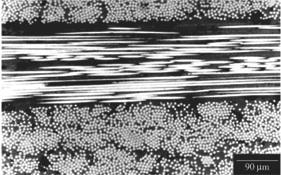
    Throughout the last four decades the exploitation of fibre-reinforced plastics (FRP) in engineering structures has been steadily diversifying from sports equipment and high performance racing cars, to helicopters and most recently commercial aeroplanes. Composite materials are essentially a combination of two or more dissimilar materials that are used together in order to combine best properties, or impart a new set of characteristics that neither of the constituent materials could achieve on their own. Engineering composites are typically built-up from individual plies that take the form of continuous, straight fibres (eg. carbon, glass, aramid etc.) embedded in a host polymer matrix (eg. phenolic, polyester, epoxy etc.), which are laminated layer-by-layer in order to built up the final material/structure.
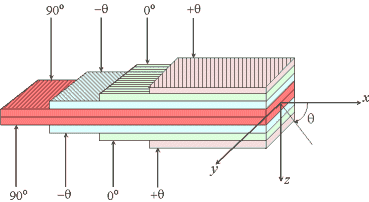
    An example of a composite laminate (1)
    Cross-Section of composite laminate. The individual fibres and surrounding matrix are clearly discernible (2)

    In the aerospace industry the benefits of exploiting the excellent specific strength and stiffness properties (strength and stiffness per unit weight) of composites in terms of lightweight structural design are immediately apparent. Furthermore, the laminated nature of high performance composite materials enables the designer to tailor optimum mechanical properties by orientating the fibre direction with the primary load paths. As a result, the first generation of commercial aircraft that contain large proportions of composite parts, such as the Boeing 787 Dreamliner and Airbus A350 XWB, are planned to enter service in the near future. Other advantages of fibre reinforced plastics, such as the relative ease to manufacture complex shapes, and their excellent fatigue and corrosion resistance, have made FRP composites increasingly attractive in the renewable energy sector.

    Composite materials have actually been around for quite a long time. As early as 3000 B.C. the ancient Egyptians embedded straw in their mud bricks in order to control shrinkage cracks and improve the tensile strength. Furthermore, papyrus based cartonage and paper maché were used to make mummy cases. In fact, manufacturing tubular shells using metals is quite difficult such that this ancient approach remains an important exploitation of composites today. Of course none of these materials would be suitable for the high performance requirements of the aerospace industry.
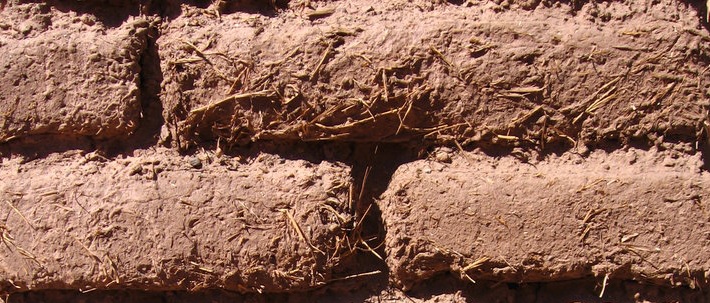
    Mud and Straw Brick (3)

    It was not until the invention of phenolic resin in 1909 that composites took-off in aircraft. The most famous example was the deHavilland Albatross transport aircraft manufactured from a ply-balsa-ply sandwich fuselage construction, which was later developed into the deHavilland Mosquito multi-role combat aircraft for WWII. The large-scale wooden construction made the Mosquito extremely light, fast and agile. Furthermore, the Mosquito was cheaper than its metallic counterparts and allowed highly skilled carpenters from all over the UK to be contracted to help with the war effort. One disadvantage of early phenolic resins was their inability to cope with hot-wet conditions such that the Mosquito became notorious for disintegrating in mid-air in the Pacific War arena.
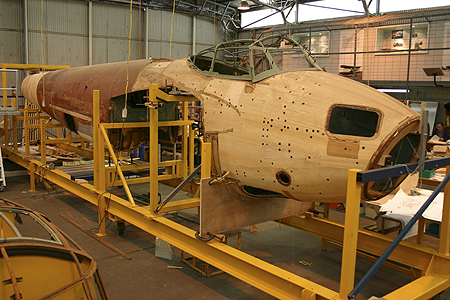
    DeHavilland Mosquito Timber Fuselage (4)

    Since the development of carbon and glass fibres in the 1950’s the aerospace industry is steadily moving towards “all-composite” civil aircraft. The most common fibre and resin types used today are:

    Fibres

    Glass


    Carbon

    Aramid – Kevlar™

    Diameter ≈ 10 mm

    Diameter ≈ 8 mm

    Stiffness ≈ 125GPa in tension

    Strength > 3GPa due to lack of defects on small diameter fibre

    Strength > 5GPa due to highly aligned planes of graphite

    Strength > 3GPa because of highly aligned linear polymer chains

    Stiffness ≈ 70 GPa for cheaper E-glass and 85 GPa for more expensive R- or S – Glass

    Stiffness ≈ 160-700 GPa but 230-400 GPa is the usual

    Much weaker and less stiff in compression as linear polymer chains come apart

    Susceptible to environmental attack and fatigue

    Not susceptible to degradation by chemicals and good in fatigue

    Susceptible to degradation by UV light and moisture

    Fibres need silane treatment to bond well to matrix

    Fibres bond well with surface treatment

    Fibres do not bond well at all leading to a weak fibre/matrix interface

    Used in boats, wind turbine blades and other cost critical applications

    Expensive material cost limits use to high performance applications were the higher mechanical properties are justified i.e. Racecars, aerospace etc.

    Weak interface gives excellent energy absorption. Thus used for bullet-proof vests, helmets and impact protection on aircraft

    Matrix

    Phenolic

    Polyester

    Epoxy

    First modern resin

    Most commonly used matrix

    Most common in aerospace

    Tends to be brittle

    Resin can be quite tough

    Can be made quite tough

    Wets out fibres badly

    Wets out reinforcement very well

    Wets out reinforcements very well

    Good chemical, heat and fire resistance and don’t produce toxic gases in a fire

    Poor chemical resistance and burns very easily

    Good chemical resistance but will burn

    Thus used in aircraft interiors

    Very cheap resin used alongside glass fibres in boat hulls, wind turbine blades and other cost critical applications

    Generally used in combination with carbon fibre for high performance, lightweight applications

    The shift from metallic to composite construction has naturally induced a change in the design methodology of aircraft components. It has to be borne in mind that not only the mechanical properties of composites differ from those of metals, but that a whole range of physical and chemical properties are different.

    – All composites have relatively low through-thickness thermal conductivities and thermal expansion coefficients in and out of plane may be widely different. Therefore thermal expansion mismatch stresses at attachment points can be a problem.

    – Composites can be made with very high translucency to electromagnetic radiation eg. X-Ray.

    – Electrical conductivity of composites is generally fairly low. Consequently, a copper mesh is often integrated in aerospace laminates to protect against lightning strike damage. However, this compromises a lot of the potential weight savings.

    – Direct contact between carbon fibre reinforced plastics and aluminium components will corrode the aluminium over time. Therefore contact between carbon and aluminium at lug attachments and joints has to be prevented.

    – All resins pick up water and their properties change as a result of this.

    – Composites are not very resistant to mechanical wear effects. External surfaces may need treatment prior to painting.

    – Composites tend to have relatively low stiffnesses on an absolute basis, from <10% to about 60% of steel.

    – The failure modes in composites are very diverse and include fibre failure, resin failure, fibre/matrix debonding, delaminations etc., which generally increases the analytical workload. Often these failure modes are related such that it can be difficult to exactly predict the failure load.

    – Composites will absorb impact energy by damage modes rather than local plastic deformation. This means failure is typically sudden and catastrophic without any prior warning that the structure has been overloaded.

    – Fatigue, stress rupture and creep resistance varies from rather poor for glass FRP in wet conditions to excellent for many carbon FRP layups.

    Especially due the uncertainty of correctly modelling the complicated failure modes, engineers have tended to revert to a “black” aluminium approach that has inhibited the full exploitation of composite materials in terms of potential weight savings. However, the ongoing research activities into advanced composites and increasing teaching in higher education will hope to resolve these issues in the near future.

    References

    (1) http://www.pmi.lv/soft/stirel/indexfiles/layup1.gif

    (2) http://www.scielo.br/img/revistas/mr/v9n2/29604f1.jpg

    (3) http://snapshots.travelvice.com/download/9993-4/IMG_6955.JPG

    (4) http://www.leakyboat.cz/Mosquito%20restoration.jpg

    Bibliogrpahy

    Potter, Kevin (1996). An Introduction to Composite Products: Design, Development and Manufacture. Springer, 5th Ed. Chapman & Hall, London.

  • Milestones in Aircraft Structural Design

    Although the exploitation of advanced composite materials in the aerospace industry is steadily increasing, high strength metallic materials, particularly aluminium alloys, are still the first choice for large-scale fleets such as the Airbus A320 and the Boeing 737. Since the introduction of stressed-skin “semi-monocoque” aircraft structures in the 1930’s the structural design philosophy has developed considerably, and the history of this development has been greatly influenced by in-service failures.

    • 1930 – 1940: Early commercial transport aircraft. Design and structural design focus primarily on static strength with little regard to long- term material degradation by mechanical fatigue i.e. cracking, creep etc.
    • 1940 – mid 1950’s: Aluminium alloys with higher static strength are developed to reduce material usage but with little improvements or even reductions in fatigue strength. A number of catastrophic in-service failures leads to the increasing awareness of fatigue failure for safe design.
    • mid 1950’s – present: The terms “fail-safe” and “damage tolerant” design are coined, which account for damaged and cracked structures before service. The embedded damage is expected grow during service as a result of cyclic loading. Safety is ensured by pre-service testing to ascertain the extent of damage that will induce ultimate failure, and regular inspection, repair and replacements in-service before the critical damage size is reached.

    Four case studies are generally considered to be critical milestones in the development of current structural design for metallic aircraft structures (2-5).

    Table 1. Four milestone aircraft failures that influenced future aircraft structural design (1)

    year

    aircraft failure

    lessons learned

    1954

    Two DeHavilland Comet aircraft crash as a result of fuselage explosions

    First indicator and seed for awareness of finite aircraft fatigue life as a critical design factor in modern thin-skinned aircraft shell structures. Development of full-scale fatigue testing.

    1969

    F-111 wing failure as a result of an undetected initial material flaw

    Initial material flaws and defects have to be accounted for prior to service and monitored in-service. Aircraft should be damage tolerant.

    1977

    Boing 707 tailplane lost as a result of fatigue failure in a spar

    The older the aircraft the more susceptible it is to fatigue cracking. Also crack growth accelerates with increasing size.

    1988

    Boeing 737 loses part of fuselage skin due to multiple fatigue cracks in spars

    Multiple-site fatigue damage may occur in ageing aircraft. Joints in the structure are especially critical.

     References

    (1) R.J.H Wanhill (2002). Milestone Case Histories in Aircraft Structural Design. National Aerospace Laboratory. NLR-TP-2002-521

    (2) J. Schijve (1994). Fatigue of aircraft materials and structures. Int. J. Fatigue. Vol. 16 (1) pp. 21-32

    (3) T. Swift (1987). Damage tolerance in pressurised fuselages. 11th Plantema Memorial Lecture. New Materials and Fatigue Resistant Aircraft Design (ed. D L Simpson) pp 1 – 7. Engineering Materials Advisory Services Ltd., Warley, UK.

    (4) A.J. McEvily (2002). Metal Failures: Mechanisms, Analysis, Prevention. Chapter 1. John Wiley & Sons, Inc. New York, USA

    (5) A.F. Blom (2002) Fatigue science and engineering – achievements and challenges. 18th Plantema Memorial Lecture, ICAF’2001: Design for Durability in the Digital Age. Vol I, pp 3-64. Toulouse, France.

  • Smart Materials Application: Variable Geometry Chevron for Noise Reduction

    For many years engineers have been trying to harness mechanical work from thermal energy by taking advantage of the crystallographic phase change of shape memory alloys (SMAs). SMAs can exhibit strains of up to 8% actuated by a transformation of the internal crystal structure from martensite to austenite as the metal is heated. This solid state phase change causes a shearing of the internal structure that deforms the material. By introducing additional internal stresses the alloy can be “trained” to transition between two states by applying temperature changes. One of the most well-known projects of the past is the Smart Aircraft and Marine Propulsion System demonstration (SAMPSON), intending to demonstrate the potential of SMAs in tailoring the geometry of jet-propulsion systems through a series of experiments.

    Boeing variable geometry chevron, flight testing (1)

    One experiment investigated the utilisation of bending actuation of SMAs to optimise the compromise between noise-mitigation at take-off and landing (noise levels are strictly regulated by civil agencies), and maximum thrust at cruise altitude. To achieve this Boeing formed the trailing edge of the exhaust nozzles on commercial turbo-fat jet engines in a triangular “chevron” shape (Figure 1) designed to be reconfigurable by actuation of embedded SMA beam components. The “Variable Geometry Chevrons” (Figure 2) feature NiTi (60% Ni and 40% Ti by weight) SMA beam elements encased in the composite chevrons in a complex 3-D configuration to induce the necessary bending moments to force the chevrons inwards into the bypass flow at low altitudes and low speeds where the engine temperature is high. The intruding chevrons cause a disturbance in the bypass flow, inducing a broader diffusion and mixing of the hot exhaust gases with the cooler bypass flow. Thereby the shear stress between the two different-velocity flows is decreased leading to a reduction in the noise level.

    FEA analysis of Boeing Variable Geometry Chevron with SMA strips shown (1)

    At higher altitudes and high speeds where the engine temperature is low, the chevrons relax and straighten-out. This guarantees a smooth exit flow that decreases the pressure difference between the inlet and exit of the engine and thus increases the engine thrust. In the original work published by Mabe et al. (2005) the system is designed for both autonomous operation as well as controlled actuation using heaters installed in the engine casing with a closed loop controller to maintain optimum in-flight tip immersions. A parametric study showed that during cruise marginal immersion helped to reduce shock cell noise with negligible thrust penalty.

    NASA developed an active bending chevron system by embedding tensile pre-stressed NiTinol SMA strips on one side of the neutral axis of the composite laminate. Actively controlled thermal excitation thus causes the SMA actuators to attempt recovery of the pre-strain constrained by the bond to the host material.  The resulting asymmetry in thermal stress causes a moment that deflects the structure.  The aerodynamic load due to engine flow and the strain energy stored in the deformed host composite are used to restore the structure to the un-actuated configuration.

    The simple design appeals by its lightweight construction with low part count and opportunity to be fully integrated into an autonomous morphing system. The “Variable Geometry Chevron” demonstrates the excellent potential of SMA’s to be integrated in composite laminates to provide internal actuation for smart structures.

    References

    (1) DJ Hartl & DC Lagoudas (2007).  Aerospace applications of shape memory alloys. Proc. IMechE Vol. 221 Part G: J. Aerospace Engineering      

  • Carbon Nanotube Hierarchical Composites for Interlaminar Strengthening

    The exploitation of conventional, continuous fibre-reinforced plastics in engineering structures has been steadily diversifying from sports equipment and high performance racing cars, to helicopters and most recently commercial aeroplanes. The main benefits of composite materials, such as their excellent specific strength and stiffness properties, must be viewed with respect to in-plane fibre-direction applications. However, if a composite plate is subjected to significant out-of-plane stresses subsurface delaminations may develop between layers due to the weak through-thickness cohesive strength of the composite (2). Previously, techniques such as Z – pinning, stitching and 3D – braiding have been investigated to improve through-thickness properties but these tend to reduce the in-plane performance of the laminate by damaging primary fibres and inducing fibre waviness (1).

    Carbon Nanotube interfacial strengthening

    Throughout the last decade the huge interest in Carbon Nanotubes (CNT) has been fuel by their extraordinary intrinsic mechanical, electrical and thermal properties, which make them ideal candidates for multifunctional structures (3). To overcome the weakness of interlaminar strength considerable research has been conducted to develop hierarchical composite structures by using nanoscale CNT reinforcement alongside microscale carbon and glass fibers. Examples in nature such as cell walls and animal shells show that excellent mechanical properties can be obtained from spreading reinforcement over a number of length scales, even if the original constituents are fairly weak (4). This paper reviews the progress in developing such hierarchical composites to improve delamination resistance and through-thickness properties by intra- and interlaminar reinforcement of multiwall carbon nanotubes (MWCNT).

    In an attempt to improve the through-thickness properties the introduction of CNTs should,

    • Ideally be attached radial to the primary fibres and extend into the surrounding matrix to stiffen the fibre/matrix interface, improve the primary fibre surface area and facilitate mechanical interlocking, all of which improves stress transfer.
    • Result in a uniform distribution of CNTs.
    • Not reduce the in-plane laminate properties.
    • Not introduce other secondary or additional modes of failure by damaging the primary fibres.
    • Allow a scalable, straightforward processing technique that can be easily incorporated with conventional manufacturing processes such as VARTM or pre-preg.

    In the literature there are currently two popular methods to achieve this,

    1. Dispersing CNTs in a polymer matrix followed by infusion of pre-forms with the CNT-reinforced resin,
    2. A direct attachment of CNTs onto the external surface of the primary fibres subsequently infused with a pristine resin.

    In the following sections the details of the two manufacturing approaches (shown schematically in Figure 1) are outlined and the implications of each approach on through-thickness performance such as interlaminar shear strength, and Mode I and Mode II critical fracture energy discussed.

    Fig. 1. Schematic diagram of conventional CFRP and hierarchical CFRP with CNTs in matrix and grown on fibres (4).

    CNT-reinforced Matrix

    The simplest method to manufacture hierarchical nanocomposites is by mechanically or ultrasonically shear-mixing CNTs into low-viscosity thermosetting resins, and then infusing or impregnating the primary fibre stack using conventional techniques such as VARTM (5; 6; 7). To date the most uniform dispersion of MWCNTs throughout the matrix have been achieved by shear mixing using a three-roll mill (8; 9). On the other hand this approach is limited to short CNTs < 1 mm at low volume fractions of 1 – 2%, which greatly limits the reinforcement potential. Higher volume fractions are to date not possible since the viscosity of the matrix increases rapidly with CNT content leading to incomplete infusion (10) or CNT agglomeration/depletion in different areas of the fabric (11).

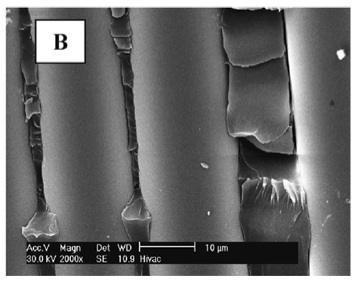
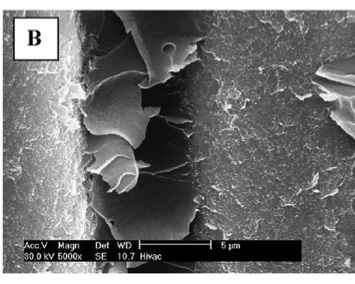
    Flexural tests of hierarchical composites with glass and carbon primary fibres show that the in-plane stiffness and strength are not impaired by the MWCNTs (5; 8). Qiu et al. (5) actually showed an improvement in tensile strength and stiffness of a glass-fibre composite of 15.9% and 27.2% respectively, while Veedu et al. (12) showed improvements of 142% and 5% for carbon composites. Most importantly, short beam shear (SBS) and compression shear tests (CST) have shown increases in the matrix-dominated interlaminar shear strength (ILSS) between 8% and 33%. Scanning electron microscopy (SEM) images show that the MWCNTs in the resin lead to better fibre-to-matrix adhesion as well as pullout and rupture of the MWCNTs before final matrix failure, which consumes additional fracture energy (Figure 2).

    Fig. 2a. Not reinforced
    Fig. 2b. CNT reinforced

    The SEM images also indicate that the alignment of the CNTs is heavily influenced by the direction of the resin flow during infusion and local orientation of the primary fibres (4). As resin infusion generally occurs in the through-thickness direction the VARTM approach can give some control in aligning the CNTs in the preferred direction for improving transverse properties, although a certain degree of random alignment remains. Furthermore, one study has shown (5) that functionalised MWCNTs resulted in slightly higher SBS shear modulus and strength (~3%) compared to a pristine un-functionalised MWCNTs. Using SEM imagery the authors showed that this stemmed from a superior interfacial bonding between the CNTs and the matrix.

    Delamination resistance is generally investigated using Mode – I double cantilever beam (DCB) tests and Mode – II end-notched flexure (ENF) tests. The literature has shown (13; 14; 15; 16) significant improvements of up to 98% and 75% for Mode I and Mode II fracture toughness respectively compared to non-hierarchical composites. The characterisation of the fracture surfaces using SEM imagery has shown that the additional pullout and bridging of the CNT is responsible for the toughening. Similarly, Garcia et al. (13) have developed an efficient technique of growing CNT mats on growth substrates and then “transfer printing” the CNT mats in between tacky pre-preg plies using a roller. Since this process better controls the CNT alignment in the through-thickness direction much higher improvements of fracture toughness of 152% in Mode I and 214% in Mode II were observed. However, the process of “transfer printing” CNT films at every ply interface is a very time consuming endeavour and may therefore not be as applicable to scalable industrial integration as the VARTM process.

    The fabrication of hierarchical composites by impregnating microscale primary fibres with nanoscale-modified resins is limited to maintaining low matrix viscosities. Furthermore, resin flow during impregnation tends to align CNTs parallel to the primary fibre direction, the least desirable orientation for improving through-thickness properties. In this respect growing or “grafting” CNTs directly onto the surfaces of primary fibres followed by infusion with a pristine, low-viscosity matrix allows higher volume fractions and is ideal for orientating fibres radial to the primary fibres. Furthermore, this approach overcomes the problems of CNT agglomeration or self-assembly into bundles as observed when CNT are freely dispersed in a matrix. Three techniques for attaching CNTs onto fibres were found to be most popular in the literature:

    1. Direct growth of CNTs onto fibres via Chemical or Thermal Vapour Deposition (CVD and TVD) (12)
    2. Electrophoretic deposition (EPD) (6)
    3. Coating of primary fibres with CNT-modified sizing agents (7)

    The first example of synthesising CNTs onto carbon fibres via CVD was conducted in 1991 by Downs and Baker (18). In this approach the primary glass or carbon fibres are initially oxidised with nitric acid and the iron catalysts then deposited onto the fibres using incipient wetness techniques such as sputtering, thermal evaporation or electrodeposition (4). The ultimate result is the growth of highly aligned and dense CNT forests onto fibre cloths (Figure 3) that are then stacked and impregnated by infusion techniques such as VARTM (12). Experiments have shown that the CNT forests are efficiently wet-out by liquid resins and polymer melts as a result of capillary forces (6; 19).

    Fig. 3. SEM images showing CNT forests (b) grown in woven pristine fibre cloth (a) (12)

    Recently, Injection CVD (ICVD) techniques have been favoured to then grow the CNTs on the primary fibres via a pyrolysis of solutions containing a catalyst precursor and a hydrocarbon source (20). The ICVD technique has resulted in better degree of orientation and growth of longer CNTs compared to classical CVD approach.

    The most crucial parameters in grafting CNTs onto glass or carbon fibres are,

    • Choosing a good catalyst for strong anchoring interaction between CNTs and fibres to maximise stress transfer and reduce damage during manufacturing processes,

    While

    • At the same time prevent oxidation damage to the primary fibres by to aggressive a catalyst.
    Fig. 4. Electrophoresis (6)

    Oxidation and gasification are especially problematic for carbon fibres since the active catalysts deposited onto the fibres etch into the surface and thus may reduce their strength by up to 55% (4). As a solution Bekyarova et al. (6) selectively deposited multi- and single-walled CNTs onto woven carbon fabric using electrophoresis. In this approach MWCNTs are first produced as is using a classical CVD process and then dispersed in an aqueous media between two negative electrodes to charge the CNTs (Figure 4). The dry carbon fabric was then immersed in the CNT doped media and sandwiched between two steel plates connected to a positive charge. Driven by the electric potential, the CNTs are thus deposited onto the carbon cloth and the CNT-carbon fibre performs then infused with epoxy using VARTM. A very simple approach has been presented by Zhu et al. (7) who sprayed nanotubes directly onto woven fibers prior to VARTM processing. The drawback of this technique compared with direct growth methods is relatively little control over the CNT orientation (4).

    The pioneering work of Downs and Baker (21) reported a 4.75x increase in interfacial shear strength (IFSS) of a nanofibre-grafted carbon composite, although such incredible improvements have not been repeated thus far. Veedu et al. (12) showed improvements of 348% and 54% for GIC and GIIC respectively for MWCNT enhanced SiC woven fabrics using a classical CVD technique; Bekyarova et al. have found improvements of 27% in ILSS for CNT enhanced carbon fabrics using electrophoresis deposition; while Zhu et al. demonstrated improvements of 45% in ILSS of MWNT doped glass fiber reinforced vinyl ester composites using a simple spray up with only 0.015 wt% of CNTs. In all three studies SEM imagery showed that the improvements arise from the increased surface area of the primary fibres and excellent wettability, which facilitates a strong bond between fibres and matrix by mechanical interlocking.

    Based on these results the general consensus is that the damage tolerance of a structure can readily be improved by CNT grafting (4). However, there is also a large variability in the results arising from the different manufacturing processes, material combinations and CNT loadings applied that conceal the exact effectiveness of the method. There is agreement that the degree of enhancement is greatly dependent on the orientation and length of the grafted CNTs and further experimental research is required to ascertain the optimal morphology and manufacturing technique to achieve this (4).

    Perspectives

    The research so far has focused on demonstrating the great potential of CNTs to improve the through-thickness of properties of conventional FRPs. In the future research should focus on,

    • Developing scalable manufacturing processes that may find application in real, large-scale industrial applications.
    • Finding new approaches that solve agglomeration and high viscosity issues to allow higher loadings of CNTs.
    • Functionalisation of CNTs to improve CNT dispersion and stress transfer with the host matrix.
    • Reducing or preventing the reduction in strength of primary fibres induced by grafting fibres onto external surface.
    • Ascertaining the optimal CNT orientation and aspect ratio to optimise the through-thickness performance.

    Key References 

    1. On the effect of stitching on Mode I delamination toughness of laminated composites. Lalit, Jain and Yiu-Wing, Mai. 1994, Composites Science and Technology, Vol. 51, pp. 331-345.

    2. One Dimensional Modelling of Failure in Laminated Plates by Delamination Buckling. Chai, Herzl, Babcock, Charles and Knauss, Wolfgang. 11, s.l. : Pergamon Press Ltd., 1981, Int. J. Solids Structures, Vol. 17, pp. 1069-1083.

    3. Big returns from small fibers: A review of polymer/carbon nanotube composites. Breuer, O and Sundararaj, Uttandaraman. 6, 2004, Polymer Composites, Vol. 25, pp. 630-645.

    4. Carbon nanotube-based hierarchical composites: a review. Qian, Hui, et al. 2010, Journal of Materials Chemistry, Vol. 20, pp. 4751-4762.

    5. Carbon nanotube integrated multifunctional multiscale composites. Qiu, Jingjing, et al. 2007, Nanotechnology, Vol. 18, pp. 1-11.

    6. Multiscale Carbon Nanotube-Carbon Fiber Reinforcement for Advanced Epoxy Composites. Bekyarova, E., et al. 2007, Langmuir, Vol. 23, pp. 3970-3974.

    7. Processing a glass fiber reinforced vinyl ester composite with nanotube enhancement of interlaminar shear strength. Zhu, Jiang, et al. 2007, Composites Science and Technology, Vol. 67, pp. 1509-1517.

    8. Thostenson, E.T., Ziaee, S. and Chou, T.W. 2009, Compos. Sci. Techn., Vol. 69, pp. 801-804.

    9. Seyhan, A.T., et al. 2007, Eur. Polym. J., Vol. 43, pp. 374-379.

    10. Gojny, F.H., et al. 2005, Composites, Part A, Vol. 36, pp. 1525-1535.

    11. Fan, Z.H. and Hsiao, K.T., Advani, S.G. 2004, Carbon, Vol. 42, pp. 871-876.

    12. Multifunctional composites using reinforced laminae with carbon-nanotube forests. Veedu, Vinod, et al. 2006, Nature, Vol. 5, pp. 457-462.

    13. Joining prepreg composite interfaces with aligned carbon nanotubes. Garcia, Enrique, Wardle, Brian and Hart, John. 2008, Composites: Part A, Vol. 39, pp. 1065-1070.

    Bibliography (Further Reading)

    14. Fan, Z.H., Santare, M.H. and Advani, S.G. 2008, Composites, Part A, Vol. 39, pp. 540-554.

    15. Yokozeki, T., et al. Composites, Part A, Vol. 38, pp. 2121-2130.

    16. Karapappas, P., et al. 2009, J. Compos. Mater., Vol. 43, pp. 977-985.

    17. Godara, A., et al. 2009, Carbon, Vol. 47, pp. 2914-2923.

    18. Downs, W.B. and Baker, R.T.K. 1991, Carbon, Vol. 29, pp. 1173-1179.

    19. Qian, H., et al. 2010, Compos. Sci. Techn., Vol. 70, pp. 393-399.

    20. Mathur, R.B., Chatterjee, S. and Singh, B.P. 2008, Compos. Sci. Techn., Vol. 68, pp. 1608-1615.

    21. Downs, W.B. and Baker, R.T.K. 1995, J. Mater. Res., Vol. 10, pp. 625-633.

  • Reducing Skin-Friction Drag by Laminar Flow

    Laminar to Turbulent Transition in Cigarette Smoke

    In another post I introduced the concept of skin-friction and pressure drag, and discussed the contradicting aerodynamic conditions to minimise either of the two types of drag. Overall the minimum resistance of slender shapes (such as aerofoils) to a fluid is attained with an attached laminar boundary layer over the entire surface. However, at some point from the leading edge the boundary layer will naturally transition to turbulent flow (see example of cigarette smoke), and any curvature in the shape will induce an adverse pressure gradient that can cause boundary layer separation. Consequently, laminar flow is generally restricted to a small percentage of the wing around the leading edge. For aircraft wings considerable research has been conducted to come up with mechanisms that maintain laminar flow over large parts of the wings and therefore reduce drag, fuel consumption and increase flying speeds.

    One of the the first aircraft to attempt to take advantage of laminar flow was the WW II fighter P-51 Mustang. During the War the Americans and British developed a very slender aerofoil shape, now known as NACA 45-100, with the point of maximum thickness about half-way along the camber line in order to reduce the effects of the adverse pressure gradient. With the maximum camber in the middle it was thus possible to maintain a larger percentage of laminar flow over the wing. In 1938 wind-tunnel tests on the aerofoil recorded a drag coefficient of .003 which was about half of the lowest ever recorded for an aerofoil of similar thickness [1]. On the aircraft however the results of the controlled laboratory tests were never achieved. Laminar flow is a sensitive phenomenon and the slightest roughness of the aerofoil surface roduced by splattered insects, protruding rivets or imperfections in machining will cause premature transition to turbulent flow before the design condition. Furthermore, the air passing through the propeller produces a highly turbulent slipstream which is exacerbated by the vibration of the entire fuselage.

    North American XP-51 Mustang - GPN-2000-001247
    North American XP-51 Mustang

    In order to improve on this early design NASA has conducted an array of flight tests on aircraft designed for natural laminar flow (NLF). To protect the leading edge from insect contamination one concept features wrapping the leading edge with paper during take-off, which is then torn-off at higher altitudes. A rather resource wasteful solution! Another solution using wire and felt pad scrapers, to as the name suggests, scrape dead insects from the surface of the wing. Furthermore, covering the leading edge with a curved deflector plate known as a Krüger nose-flap has been investigated on various aircraft. The drawback of these designs is that they disturb the streamlined profile of the aerofoil and therefore induces parasitic drag that outweighs the improvements of maintaining laminar flow. The Krüger flap concept is nowadays incorporated in high-lift devices but only used during landing and take-off, which only accounts for a fraction of the full flight time

    Tests on an experimental F-16XL aircraft were used in a NASA programme to assess laminar flow on aircraft flying at supersonic speeds. The main aim was to assess the merit of swept-wings for future high speed civil aircraft. The swept delta-wings used active perforated titanium “gloves” attached to the surface featuring tiny holes through which most of the boundary layer was drained-off by an internal suction system. The panels covered 60% of the wing’s leading edge perforated with about 10 million microscopic size laser-cut holes. Through these holes the suction system in the wing drew away a significant portion of the slower fluid in the boundary layer close to the surface, thereby expanding the extent of laminar flow across the wing. The Supersonic Laminar Flow Control (SLFC) successfully achieved laminar flow over large portions of the wing up to supersonic speeds of Mach 1.6 [2].

    The concept of using suction wings to maintain laminar boundary layers has thus far been the most researched and promising solution. Before these technologies can be applied issues such acceptable reliability, maintainability and operational characteristics have to be resolved and the long-term technical and economic viability of the technology demonstrated. The current legislative framework requires the development of novel aircraft design in the near future in order to meet the ambitious fuel economy requirements. Perhaps advances in micro-machining, nanotechnology and smart-material technologies will lead to LFC devices becoming integral parts of revolutionary new aircraft.

    F-16XL fighter with suction panels

    References

    [1] http://yarchive.net/mil/laminar_flow.html

    [2] R.D. Roslin (1998). Overview of Laminar Flow Control. NASA Technical Report. NASA Langley