I am an Associate Professor in Digital Engineering for Lightweight Design at the Bristol Composites Institute of the University of Bristol in the UK.
I specialise in the analysis, design and manufacture of lightweight and sustainable structures. My research sits at the intersection of advanced materials, computational design & automated manufacturing. In particular my goal is to combine digital capabilities in simulation and manufacturing to shape composite materials into the most high-performing structures.
I have a particular interesting in tow-steered composites, computational bifurcation analysis, nonlinear optimisation under uncertainty, shape-adaptive morphing structures, and automated tape laying. I also have an interest in biomechanics and, whenever I can, I like to collaborate with biologists to understand how nature designs, in order to apply these insights through bio-mimicry.
Impact
While my research is multi-disciplinary it focuses specifically on aerospace engineering and I collaborate with industrial partners such as Airbus, Embraer, ESA, NASA and Bristol spin-out company iCOMAT.
I am also passionate about engaging the broader public in the outputs of engineering research and the fascinating topic of aerospace engineering in general. Two major projects in public engagement that I’ve led over the years are the Aerospace Engineering Blog and the Aerospace Engineering Podcast. For additional activities, please see the outreach section.
Now
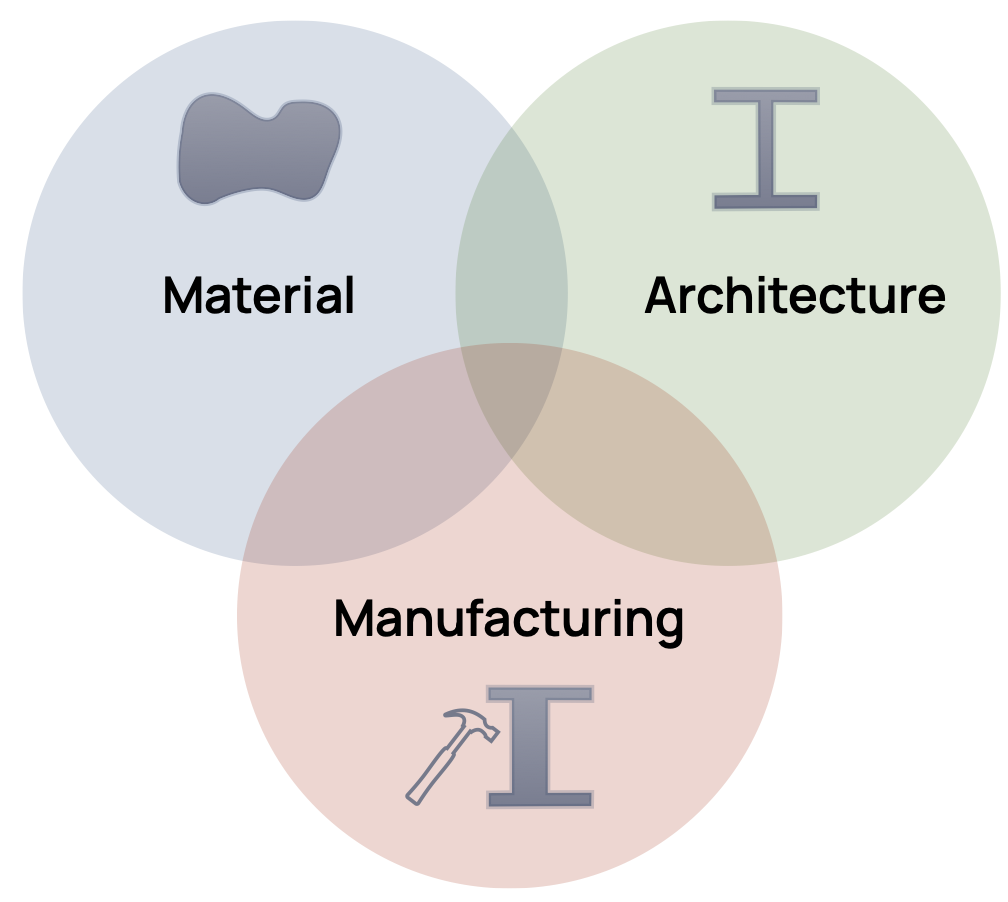
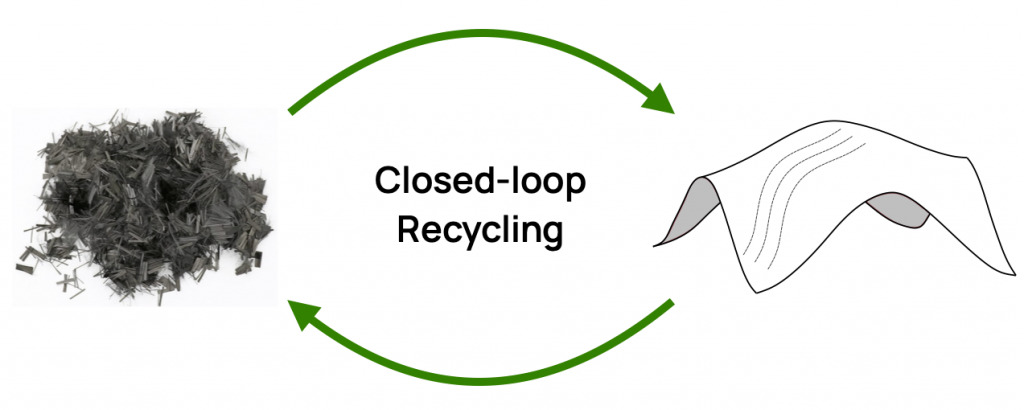
At the moment I am particularly interested in recycled short-fibre composite materials. Over the next decade, the first generation of composite mega-structures (think aircraft and wind turbine blades) will need to be recycled, but the recycled composite material is currently not suitable for a circular value chain. While recycled short-fibre composites have worse raw material properties than virgin long-fibre composites, they are easier to form into lightweight and optimised curved structures with fewer defects. This is illustrative of the holistic structural design triad shown above—at the point of application, we are not interested in raw material properties but rather the quality of the product when shaped by a manufacturing process into a load-bearing structure. My hypothesis is that the lower mechanical properties of recycled short-fibre composites can be offset by the superior structural architectures that can be manufactured from these materials at better manufacturing quality.
Honours
2025 – 2029 : UKRI Future Leaders Fellow
2022 : JEC Composites Innovation Awards Finalist with iCOMAT
2019 : Philip Leverhulme Prize in Engineering
2018 – 2023 : Royal Academy of Engineering Research Fellow
2018 : CleanSky2 Academy PhD Awards 3rd Prize
2015 – 2016 : Visiting Researcher at NASA LaRC
2015 : AIAA SciTech Best Structures Conference Paper Award
Post-Nominals
PhD : Advanced Composites, University of Bristol (2016)
MEng : Master of Engineering, University of Bath (2011)
CEng : Chartered Engineer
MRAeS : Member of the Royal Aeronautical Society
FHEA : Fellow of the UK Higher Education Academy