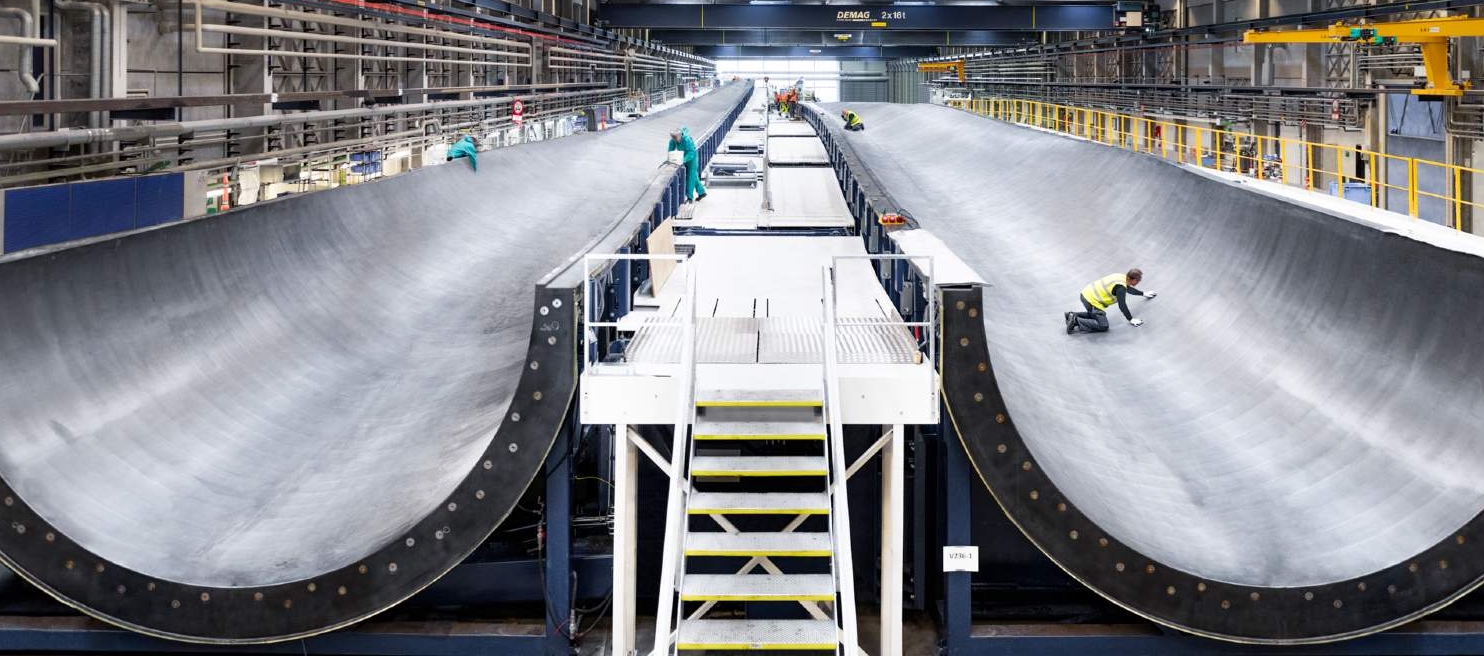
Wind energy is expected to play a central role in the global transition to low-carbon electricity. Over the past decades, the dominant design for wind turbines has been the single large rotor mounted on a tall tower. However, as turbines continue to grow in size, engineers face increasing challenges related to transportation, manufacturing, structural loads, and cost.
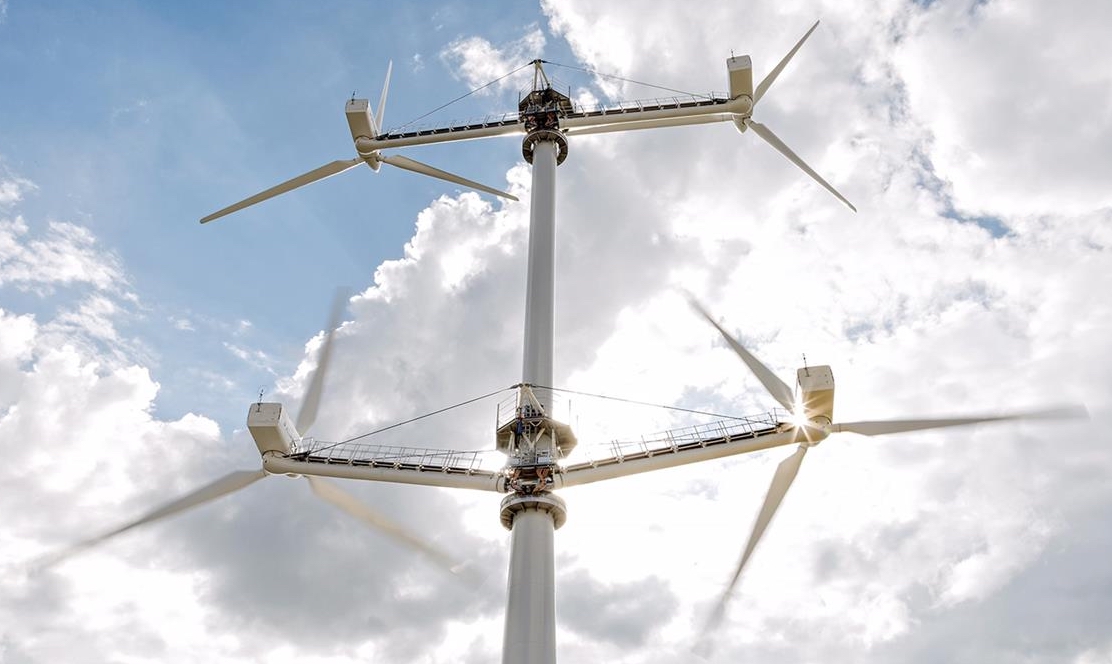
One alternative concept that has attracted growing interest is the multi-rotor wind turbine (MRWT). Instead of one very large rotor, a multi-rotor turbine uses many smaller rotors mounted on the same structure to achieve the same overall power output. This approach could offer several potential advantages: smaller blades are easier to manufacture and transport, maintenance can be simplified, and the system may continue operating even if one rotor fails. In some cases, interactions between the rotors may even slightly increase the total power generated.
Despite this promise, research on multi-rotor systems has been limited by a practical issue: the lack of suitable reference rotor designs that researchers can use for modelling and comparison. Most existing wind-turbine reference models were created for single-rotor systems and are not well suited to studying arrays of smaller rotors.
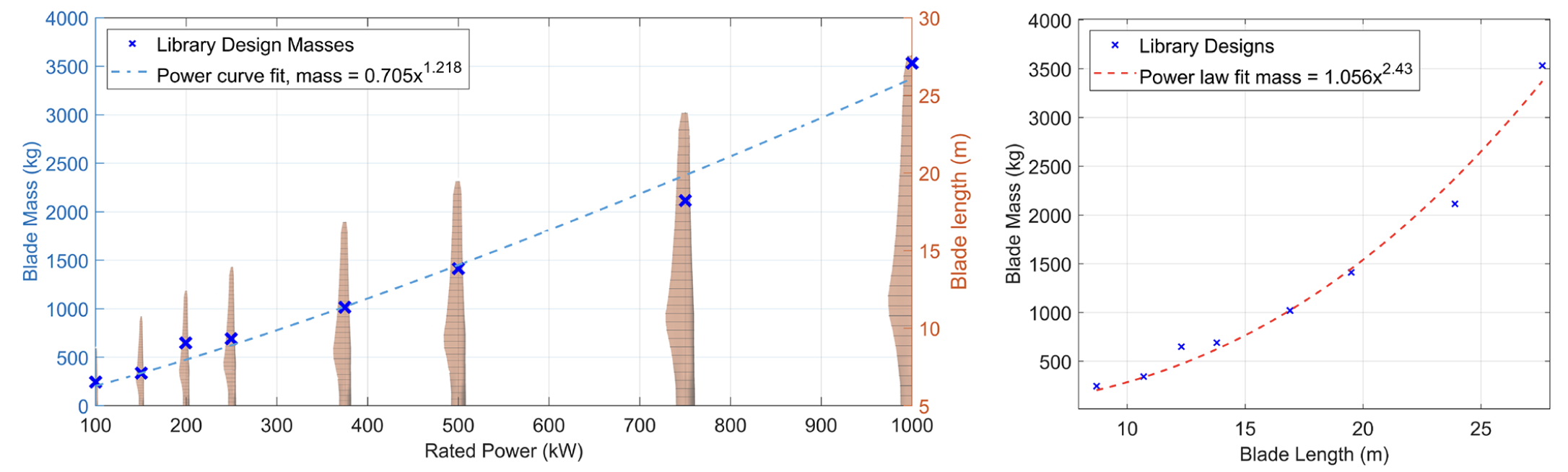
To address this gap, we have developed an open-source library of optimised wind-turbine rotors, covering rated powers from 100 kW to 1 MW. These rotor designs were created using aeroelastic optimisation methods, which consider both aerodynamic performance and structural behaviour. The optimisation process enabled the design of blades that balance energy production, structural safety, and material use.
A key feature of the library is that the designs are fully open and compatible with widely used simulation tools. This means researchers around the world can use the models directly in their own studies. The library also includes a method for interpolating between designs, allowing new rotor sizes to be generated between the predefined ratings.
By providing a shared set of reference designs, this work aims to make it easier to explore questions such as:
- How many rotors should a multi-rotor turbine have?
- How do rotor interactions affect performance and loads?
- Can multi-rotor systems reduce the cost of wind energy?
Ultimately, the goal is not to produce “ready-to-build” turbine blades, but rather to provide a flexible starting point for research and innovation.